Getting surgery sucks. It is, however, usually the only option for someone who tears a tendon, ligament, or muscle while playing a sport and wants to play competitively again. So it’s a situation where one needs to suck it up and take some solace in the fact that they are on the road back to the top. Especially with TJ surgery, the prognosis is great and with proper attention to rehab there’s a good chance of making velocity gains on top of having the elbow of a superhero and time off to improve mechanics.
The first 3 months post-op were exciting in the sense that everything was new and changes were dramatic. Things returned to normal rather quickly, and it was all building up to that fateful day when I would chuck that pill again, even if it was only for 30 feet at first.
Surgery Day
I was in and out of the O.R. in about 75 minutes, and I had minimal pain and wasn’t overly groggy or out of it. I had a prescription for Vicodin and a sling on my arm that I was to keep on for two days. I was told I could move my hand and arm around in any way I wanted, and I could squeeze a soft ball. I went home and did all of the above, though I only had the strength of an infant with low blood-sugar.
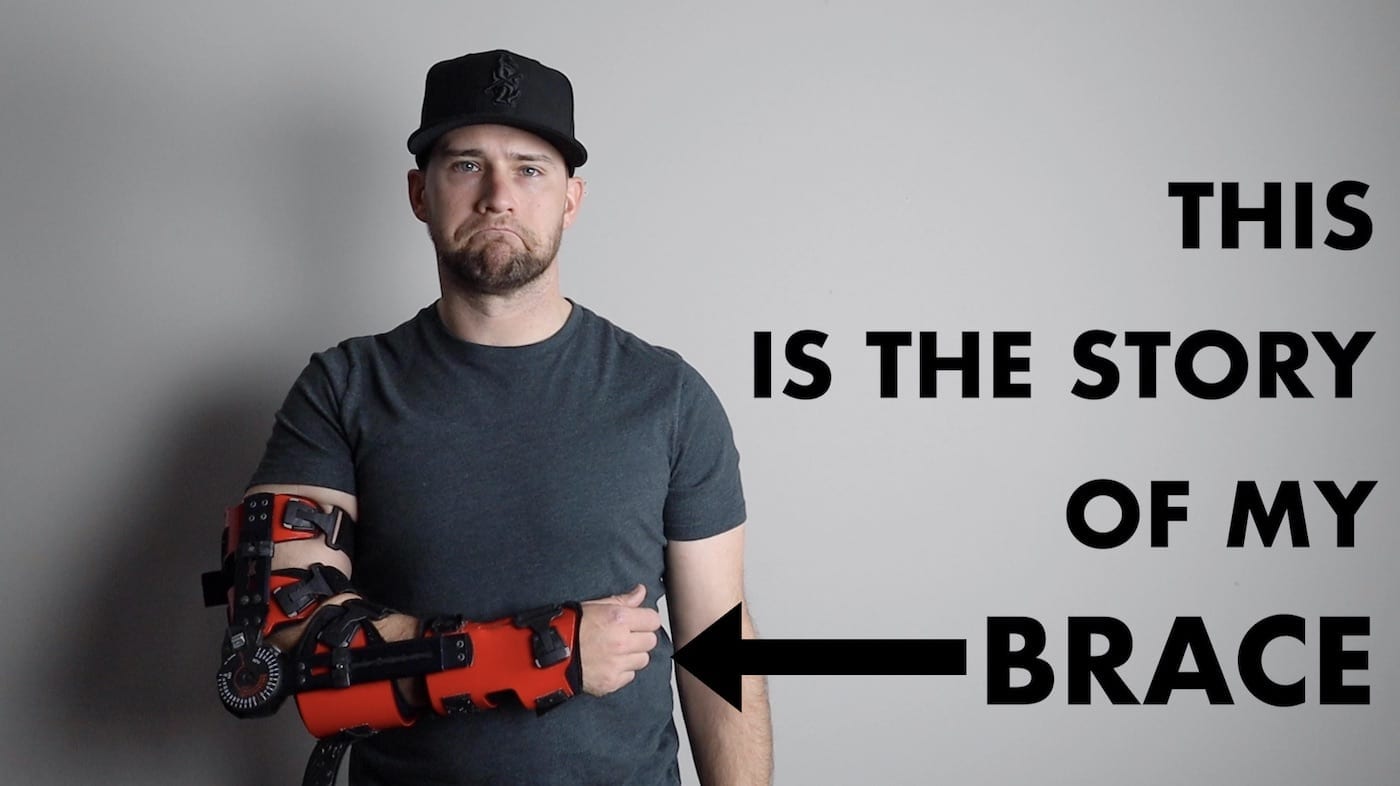
I was worried about my arm not being immobilized, as I had previously mentioned, but I dealt with it, and I was quite nice after those two days passed and I had only an Ace bandage left covering my incision.
Week 1
I was given 4 different Thera-Bands at my 7 day post-op visit and was instructed to perform 4 exercises with them every day. I was to start light and move up once I could perform 2 sets of 20 reps with each exercise. The four, which I still do daily 9 months later, are: Wrist Flexion, Extension, Supination and Pronation. I also continued to squeeze a soft ball.
Weeks 2 to 3
My other goal, beside strengthening my forearm, was to extend my arm. As soon as the brace was off I was on my own to do this as tolerated. All day I would just flex and extend, flex and extend, flex and extend. The first 150 degrees or so of extension came within about 2 weeks, but the last 30 and then 15 degrees were tough to get. By about 3 weeks I could fully extend my arm, but upon awakening It would usually be a little less than straight until a week or two later.
Since Dr. Morgan views glenohumeral internal rotation deficiency (GIRD) as a chief factor in elbow problems, I was instructed to resumed sleeper stretches and hip flexibility exercises at week 3. Addressing and correcting flexibility problems before throwing was a necessity.
One of the most helpful exercises in getting my arm to extend was to prop a pillow under my tricep and hold a 1 lb dumbell in my hand, allowing gravity and the weight to extend it.
Weeks 3-6
At the week 3 check-up I was given the green light to start conditioning again, as my incision was closed and sweat would no longer cause an infection risk. So I started running, doing Bikram yoga, and lifting weights to the extent I could without using my right arm. I also started with light scapula exercises, which I also performed with Thera-Bands.

Slightly Swollen Elbow at Week 3
I was able to squat using a Top Squat attachment, and I did a lot of sled dragging with a harness, and body weight and weighted vest exercises. I was happy to be active again.
Weeks 6-12
I was cleared to lift weights to my heart’s content at week 6, but again, I had to start light. I started with wall pushups and worked up (or down) to floor pushups. Holding a 15 pound weight would make my forearm nearest the elbow pretty tired, but over time that effect would only occur with heavier and heavier weights, until around week 10 I could hold 50s in each hand with no problem. Most of my upper-body work was done with light dumbbells and bands until my strength was back up. It was crucial to get my overall body strength up before the throwing phase started at week 12.
I also resumed my rotator cuff circuit at week 6. This was the Orioles shoulder workout and is very extensive. It takes about 30 minutes to complete 2 cycles. I credit this with the fact that my shoulder has been perfect and very strong since. Many pitchers return from elbow surgery just to tear a labrum or rotator cuff afterward because they neglect their shoulders while rehabbing their elbows. While injuries are never totally controllable and preventable, I did everything I could to avoid any further arm problems.
What the doctor told me was that my elbow was fine, and that I could lift and run around and fall on it if I wanted. I didn’t really believe this, but an important event took place around week 8 when I started running agilities and sprints with the team. Within ten minutes in the first session of agilities I clipped a cone, slipped, and caught myself as I fell with my throwing arm. I got up, finished the drilled, looked down at my arm, and let out a big sigh of relief. It was a big moment, because I didn’t really trust my arm before that fall. But fall I did, and nothing happened. No pain, no soreness, no stiffness, nothing. It was a blessing in disguise, and I trusted my arm from that point on.

At week 10 it was swelling-free and ready to go
At Week 10 I was feeling pretty strong, with full range of motion and no swelling left in my arm. It felt normal and ready to go.
At week 12 I had another check-up and was cleared to start throwing. It was exciting yet nerve-racking at the same time. It was the next step, and I was physically ready for it, but mentally was a slightly different story…
Really good blog. I had TJ on 4/29/09 by Dr. Steve Jordan in Tallahassee the FSU team doc. I pitch at Jacksonville University in FL. It’s interesting how everyone’s rehab procedures are different like you said, I have noticed the same things. I’m supposed to start throwing at 12 weeks. I had a semi hard cast for two weeks, then brace for another 4 weeks.
When did you achieve full ROM on your own and when were you able to do a pull up or push up?
thanks for the info…yea I’m still not full ROM for bending the elbow I can get to 125 passive ROM and 135 active ROM and 140 is full ROM for me. I hoping to be back game ready next 1st of March which will be 10 months out from surgery. The Doc said this is reasonable so that is what I am on schedule for now.
Good luck with you recovery. I was reading your hip stuff to and my right hip (push off leg) is the tight hip. I tweaked something in my hip flexor over a year ago and not it “pops” when I open it
I had full ROM after about 3 weeks. Since I was never braced, I was free to start loosening it up from the start. It wasn’t a nice and fluid motion at 3 weeks, but I could fully extend and flex it at that point. After about 6 or 7 weeks I had fluid motion back to where it was just like my left arm, without the tightness at each extreme.
At 6 weeks I started strength training again, and for my chest I started with wall pushups, worked down to bench pushups, then finally regular pushups. So after 6 training sessions (3x week for 2 weeks) I could do full pushups. They sure weren’t easy, though. I had lost a lot of strength, but It came back pretty quick.
I actually never do pull ups, only chinups, because they are so taxing on the rotator cuff, and can overbuild them. Chinups recruit the lats and biceps much more, while omitting the rotator cuff muscles, and as such are better for pitchers.
I started light on lat pull downs and got stronger at them, but holding my bodyweight was too much for my forearms for a long time. Chinups are taxing on the forearms, and they would make me sore for days afterward, which started to interfere with my throwing, and this was 5 or 6 months post-op. Chinups stopped making my forearms sore and tired at around 8 months. Remember that youre doing so much rehab and throwing that your ligament and forearms are already getting worked hard, and while they need to get stronger they still need rest. Chinups were too much for me, especially as I started throwing harder. I do them occasionally now, but I still limit them while I’m in-season.
You’ll find that the hardest thing is finding a balance between rehab, throwing and strength training, because you want to be strong and fresh in all areas, but some interfere with each other. Anytime you add something new to your training, closely monitor yourself the next day. If you listen to your arm it will tell you when to back off of something. Hope that helps. If you have any other questions feel free.