My Monthly Newsletter! Get it!
* = required field
Jaco Clothing – Cool Stuff

So I tore my UCL in the conference tournament last May.  I did not see it coming on that particular pitch, but I realized it probably was in my future.  My head athletic trainer had told me that it could go at any moment, seeing how I had partially torn it in both high school and the previous season in college.  

From March on I was having forearm and elbow problems, and could barely recover between starts. But I got through it and didn’t miss time, and made it through 5 2/3 innings of my last start of the year.   I was actually starting to feel better by time it finally went.  

So anyway, I figured I would put together some of the findings of this journey, of which I am almost through (8 months post-op and at 90% of previous velocity)

Today’s Topic: Doctor Discrepancies

Now, I got surgery from Dr. Craig Morgan in Wilmington Delaware.  I had heard good things about him, seeing as how is world-renowned, and I trusted him above all others with my pitching future.  

Five teammates of mine had this same surgery during my career, and there were differences in all five rehab protocols.  And this is interesting, because everyone seems to make it to the finish line just the same.  Thus, the question arises- which protocol is the best? If you’re not familiar with the tommy john procedure, check out the link in my About Me page.

That question is hard to answer but from my own experiences, I do have an opinion. I base this opinion on what I went through, what others went through, and what seems to intuitively make sense about the human body and its ability to heal.

First: We Need a Tendon

 I received a gracilis tendon allograft from a cadaver.  This means that the tendon used in my elbow was harvested from a deceased donor and installed into my elbow.  Advantages: only one site to rehabilitate, and a better success rate (so says my doctor).  Most doctors use the palmaris longus tendon from the same forearm, and some use one’s own gracilis tendon, which is from an the adductor muscle by the same name in the medial thigh.  

Getting the palmaris taken from the forearm is the industry standard, but I was thankful to only have to rehabilitate one surgery site.  My buddy had his tendon taken from his gracilis, and that harvest hurt him more than the elbow did for the first month or so.  He hobbled around much more than seemed necessary.  This was done only because he didn’t have a palmaris longus in his throwing arm, which is reasonably common. (The palmaris longus serves little function in the forearm, which is why many people lack it with no lack in capability).

Getting the cadaver tendon graft was advantageous to me because I was able to jump into rehab very quickly, as is discussed later on in this article.


Second: To brace or not to brace?


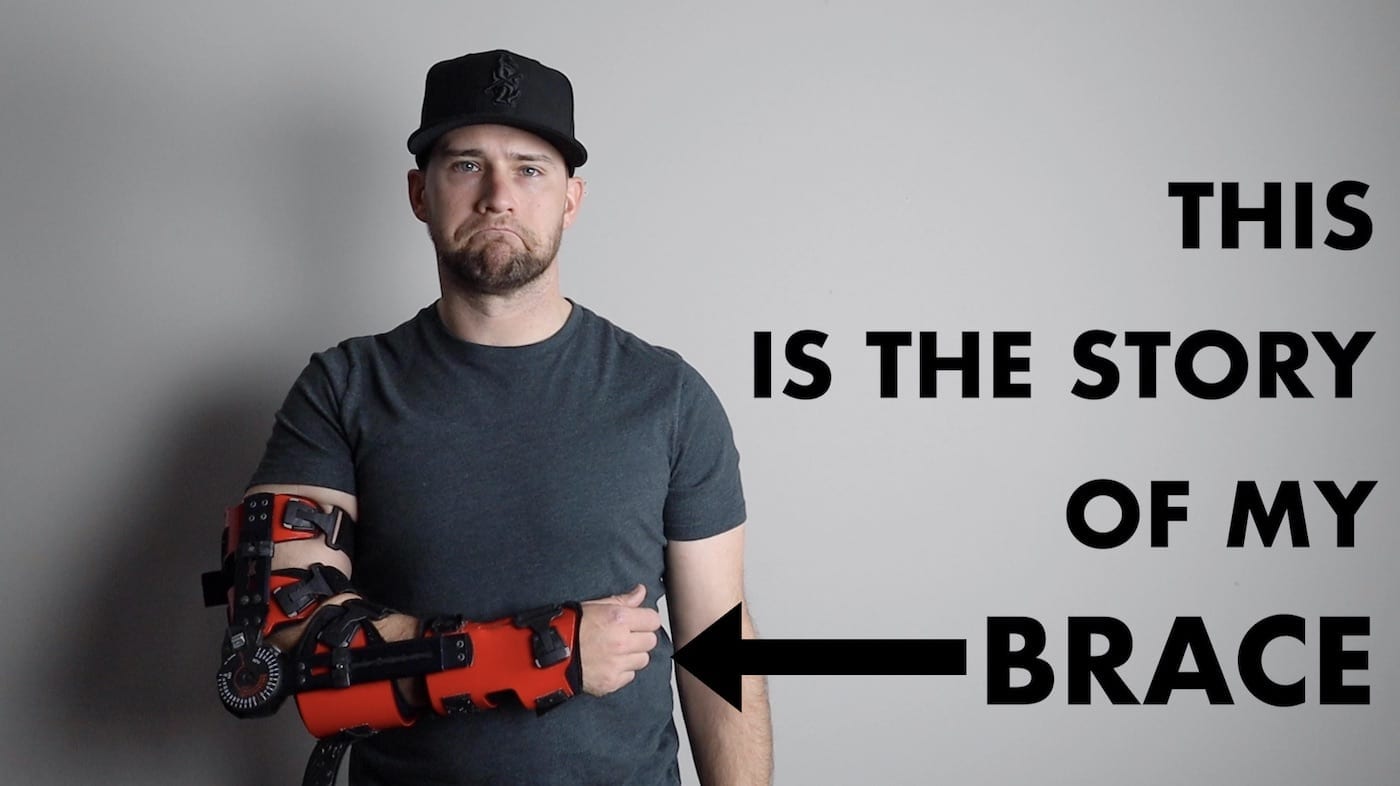
Every other player I know who has had Tommy John was in an adjustable metal brace which allowed controlled advances in range of motion. Dr. Andrews, Dr. Cosgarea, Dr. Baugher, the Mets’ team doctor (don’t know the name) all prescribed braces post-op, usually for at least a few weeks.

None of Dr. Morgan’s Tommy John patients wear braces.  Ever.  I was in a sling for two days and was then free, with only an ace bandage covering my incision.  If it sounds scary compared to the heavily braced alternative, that’s because it kind of is.  Thing is, though, it does inspire in you the notion that your elbow really has been made stronger, even from day one.  

I asked Dr. Morgan, “What if i roll over on it, or trip and fall and catch myself on it, or get bumped into by someone? I’ll be OK?”  He responded that my elbow was stronger now than the day I was born (keep in mind I had just been revived from anesthesia when I asked these questions).  

So I slept on it that night.  I moved it around in whatever way I wanted. When I was out of my sling two days later I was really, really free.  It was crazy, and I wondered, why does everyone else brace their patients up when my doctor doesn’t, and his success rate is through the roof?  I think the only answer is that the new ligament really is, as he said, strong as hell as soon as the last stitch is closed.

Third: Strengthening Protocols 

My strength training protocol was administered by my physical therapy team at school, but I was given the go-ahead to start forearm strengthening just one week after surgery.  It was quick.  Obviously, I could do this because I was not in brace.  Braced players have to wait until the brace is off, and then maybe an additional few weeks or month(s) to start forearm training.  Part of the reason I was able to do this I’m sure was because of my graft, which allowed me minimal surgical trauma.

After forearm strengthening was underway, I was able to start running and doing other conditioning at three weeks, and I could lift weights starting light from I think 6 weeks post-op.  My elbow was always up to the challenge, and progressed quickly through it all. Above all I never felt rushed, and always felt reasonably capable for the new additions to my rehab.  The pace felt right, not going too fast, and not stagnating or plateauing at any one thing.

Fourth: Throw Now, or Throw Later?

I started throwing (lightly tossing) at three months post-op.  So do Dr. Andrews’ patients.  Two other teammates started throwing at four months, and one started at six months.  My protocol said that one is ready to throw when the arm has adequate strength, no swelling and full range of motion.  For me, I got to start at three months, right on schedule.  

So why the discrepancy in starting date?  This is something that makes little sense to me, especially when many prominent doctors have great success starting their patients at three months.  If so many patients start at three months and have success, why wait?  Is there any research that says to wait? I can’t answer these questions, but there is a lot of discontinuity between doctors, even in such a well established surgery as UCL reconstruction.  

Fifth: Throwing Progression

 I went in stages, getting a large base of throwing and generally moving up in distance once per month for the first three months.  The number of throws increased during each month, and I got comfortable throwing again after about a month.  the fourth month moved me from 60 feet to 120 feet in only two weeks, and from then on the program got more rapidly moving.  I threw from the mound after 3 1/2 months of throwing, and moved through 1/2 speed to 3/4 speed in about another month.  

My program was less progressive than the Andrews’ program is, which pushes the pitcher faster through the program, to allow him to return to form faster if he is able. The pretense is that if one can complete each step twice without pain he can move up to the next step. If pain crops up, then the program is backed off as tolerated.  It makes sense and allows the elbow, which heals at different rates in each player, to call the shots about what it can handle.  Encountering pain is normal, and not at all a big deal. The elbow is fixed, and with reasonable prudence nothing will re-injure it.  I had pain here and there, and it always cleared up, even if I didn’t back off.  Very slight pain often just indicates that the elbow is dealing with a new stress, which is part of the progression, though it should never be ignored.  

The finish line is there just the same

What I have gathered from my amateur analysis of all this surgery nonsense is that each rehab journey is going to be different, depending on the doctor, but the finish line will be reached just the same in each one.  The surgery is not easy, as it is mentally draining at times, but each different method converges to the same end.  I wonder, though, why there is such discontinuity between doctors and their protocols.  It appears as though the successes of some and the data gathered are not shared across practices.  Certainly there is never one right way of doing something, but at the same time, if a longer recovery time is not necessary, then why prescribe it?

In Part 2 I will discuss my early recovery and how my elbow progressed in the first months before throwing began. Stay Tuned, Kids! 


2 Responses to “The Tommy John Surgery Experience Pt.1”

  • Steven:

    My Doc told me that the graft can still break the first 6 weeks or so if you fall on it etc. So thats why he wants the brace worn. I don’t know though I geuss just different opinions with the same results hopefully lol.

  • Yeah each doctor is different, but the result seems to be the same as long as you do the rehab.

    10 months is definitely doable. Last thing to come back is life on your pitches, which may or may not quite be there at 10. From starting at 50% curves to getting them to actually bite hard at 100% took me a solid 6 weeks. Changeups come faster, though. Feel just takes time. I’m 10 and a week now and everything is starting to look like it used to, minus about 5% of each pitch, be it location, bite or velocity.

    And definitely work on your hips, and your body as a whole. You could consider getting a functional movement screen or a similar analysis from your school’s training staff. If there is one good thing about surgery it’s that you have 9 months to reinvent yourself, time that you will never again get. If you make the most of it, it can put you on a whole new career track. I’m gonna keep updating the blog both with surgery and training info, so hopefully it will continue to be helpful.

Leave a Reply